Improves Insulin Secretion
Glycedil increases the levels of active incretin hormones in the body, such as GLP-1, which enhance insulin synthesis and release from pancreatic beta cells in a glucose-dependent manner.

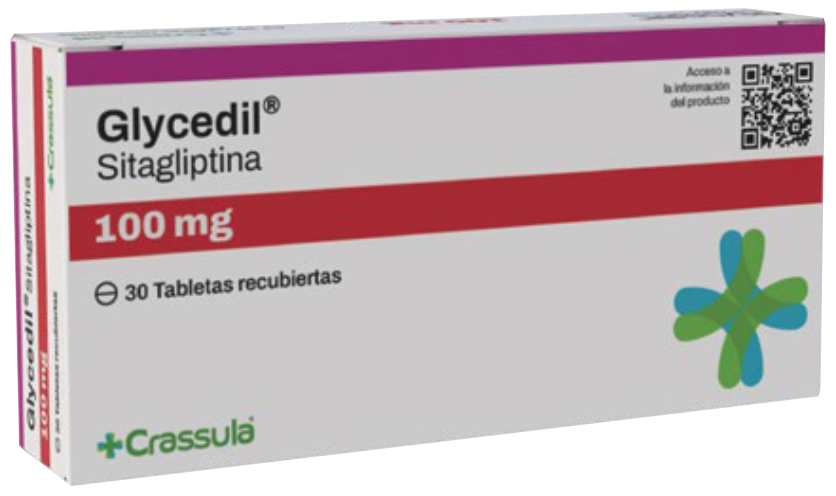
Glycedil contains sitagliptin, a dipeptidyl peptidase-4 (DPP-4) inhibitor used to improve glycemic control in adults with type 2 diabetes mellitus, together with diet and exercise.

Glycedil increases the levels of active incretin hormones in the body, such as GLP-1, which enhance insulin synthesis and release from pancreatic beta cells in a glucose-dependent manner.
Supports glycemic control by reducing glucagon secretion in a glucose-dependent manner.
By increasing insulin production when glucose levels are high and reducing hepatic glucose production, Glycedil facilitates more effective blood sugar control.
Glycedil can be used alone or together with other antidiabetic medications such as metformin, sulfonylureas or insulin, adapting to each patient’s specific needs and level of glycemic control.
As a DPP-4 inhibitor, Glycedil is administered orally, which represents a more comfortable and less invasive option than insulin injections.
Glycedil blocks the activity of DPP-4, an enzyme that rapidly breaks down incretin hormones such as GLP-1 and GIP, which are crucial for postprandial glycemic regulation.
By inhibiting DPP-4, Glycedil raises and prolongs the activity of these hormones, strengthening their effect on insulin production and glucose regulation.
Elevated incretin levels promote greater insulin release by the beta cells, crucial when glucose levels are elevated, thereby minimizing the risk of hypoglycemia.
Glycedil also decreases glucagon production by pancreatic alpha cells, reducing hepatic glucose release and helping to control postprandial glucose spikes.
The combination of increased insulin secretion and decreased glucagon production results in a significant improvement in the management of glucose levels, especially after meals.
How Glycedil works
Glycedil®SitagliptinIt is essential that Glycedil be used as part of a comprehensive diabetes treatment plan, which should also include an appropriate diet, regular exercise and frequent monitoring of glucose levels, as directed by a healthcare professional. Glycedil is generally not recommended for type 1 diabetes or diabetic ketoacidosis.
Glycedil contains sitagliptin, a dipeptidyl peptidase-4 (DPP-4) inhibitor used to improve glycemic control in adults with type 2 diabetes mellitus, together with diet and exercise.
Glycedil increases the levels of active incretin hormones in the body, such as GLP-1, which enhance insulin synthesis and release from pancreatic beta cells in a glucose-dependent manner. It supports glycemic control by reducing glucagon secretion in a glucose-dependent manner.
By increasing insulin production when glucose levels are high and reducing hepatic glucose production, Glycedil facilitates more effective blood sugar control.
Glycedil blocks the activity of DPP-4, an enzyme that rapidly breaks down incretin hormones such as GLP-1 and GIP, which are crucial for postprandial glycemic regulation. By inhibiting DPP-4, Glycedil raises and prolongs the activity of these hormones, strengthening their effect on insulin production and glucose regulation.
The combination of increased insulin secretion and decreased glucagon production results in a significant improvement in the management of glucose levels, especially after meals.
Glycedil can be used alone or together with other antidiabetic medications such as metformin, sulfonylureas or insulin, adapting to each patient’s specific needs and level of glycemic control.
As a DPP-4 inhibitor, Glycedil is administered orally, which represents a more comfortable and less invasive option than insulin injections.
Glycedil contains sitagliptin 100 mg and comes in a box of 30 tablets, following the British Pharmacopoeia standard.
It is essential that Glycedil be used as part of a comprehensive diabetes treatment plan, which should also include an appropriate diet, regular exercise and frequent monitoring of glucose levels, as directed by a healthcare professional. Glycedil is generally not recommended for type 1 diabetes or diabetic ketoacidosis.
Glycedil is manufactured according to the strict specifications of the British Pharmacopoeia to ensure consistency and superior quality. Crassula Pharma certifies that all its products are manufactured in accordance with GMP parameters.

Manufactured according to the strict specifications of the British Pharmacopoeia to ensure consistency and superior quality.
Crassula Pharma certifies that all our products are manufactured in accordance with GMP parameters.