Menorrhagia and Metrorrhagia
Management of bleeding associated with general or local fibrinolysis.

Tranexamic Acid
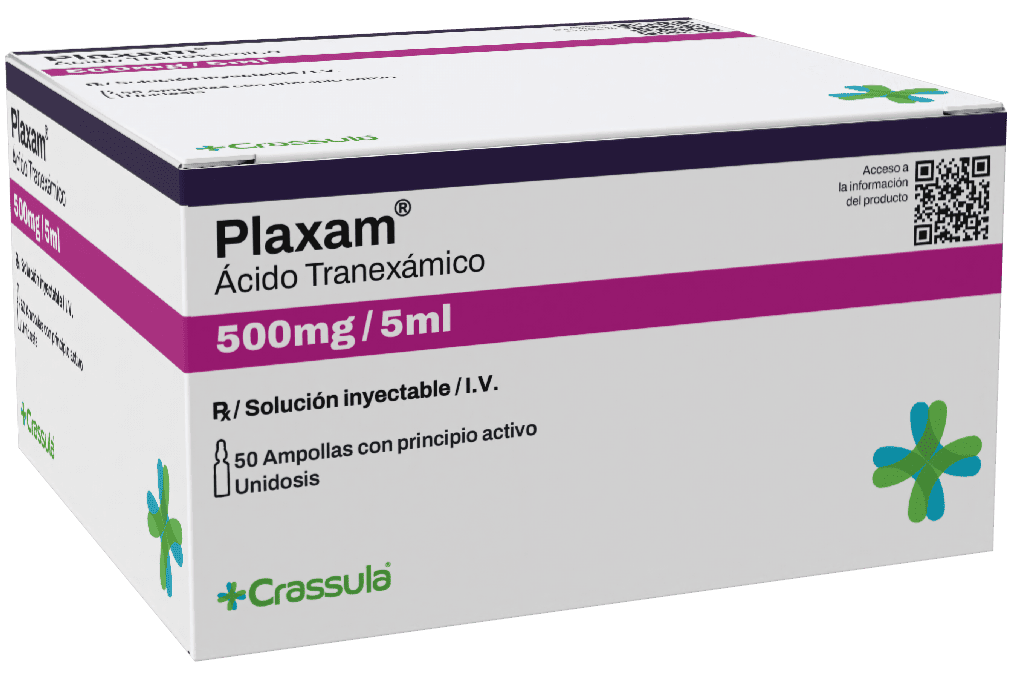
PLAXAM is a tranexamic acid injection that helps prevent and treat haemorrhage associated with general or local fibrinolysis, according to the approved product information.

For prevention and treatment of haemorrhages due to general or local fibrinolysis in adults and children from one year of age.
Management of bleeding associated with general or local fibrinolysis.
Including ENT, gynaecological, thoracic, abdominal and cardiovascular surgery.
For haemorrhage in gastrointestinal or haemorrhagic urinary disorders when clinically indicated.
Management of haemorrhage due to the administration of a fibrinolytic agent.
Tranexamic acid exerts anti-haemorrhagic activity by inhibiting the fibrinolytic properties of plasmin.
How Plaxam works
Plaxam®Tranexamic Acid Binds to Plasminogen Inhibits Plasmin Fibrinolytic Activity Helps Stabilise Fibrin ClotBy inhibiting plasmin fibrinolytic activity, tranexamic acid helps preserve fibrin clot stability.
Tranexamic acid is excreted mainly unchanged in urine; reduce dosage in mild to moderate renal impairment and do not use in severe renal impairment.
Contraindicated in acute venous or arterial thrombosis. Assess thromboembolic risk factors before use.
Use slow intravenous injection only. Contraindicated in severe renal impairment and history of convulsions. Monitor possible visual disturbances.
PLAXAM is a tranexamic acid injection that helps prevent and treat haemorrhage associated with general or local fibrinolysis, according to the approved product information.
For prevention and treatment of haemorrhages due to general or local fibrinolysis in adults and children from one year of age. This includes menorrhagia and metrorrhagia (management of bleeding associated with general or local fibrinolysis), surgical procedures (including ENT, gynaecological, thoracic, abdominal and cardiovascular surgery), gastrointestinal and urinary bleeding (for haemorrhage in gastrointestinal or haemorrhagic urinary disorders when clinically indicated) and fibrinolytic agent-related haemorrhage (management of haemorrhage due to the administration of a fibrinolytic agent).
Tranexamic acid exerts anti-haemorrhagic activity by inhibiting the fibrinolytic properties of plasmin. By inhibiting plasmin fibrinolytic activity, tranexamic acid helps preserve fibrin clot stability.
For local fibrinolysis: 0.5 g (one 5 mL ampoule) by slow intravenous injection, two to three times daily, unless otherwise prescribed. For general fibrinolysis: 1 g (two 5 mL ampoules) by slow intravenous injection every 6 to 8 hours, equivalent to 15 mg/kg body weight. Administration is strictly limited to slow intravenous injection. Do not administer by the intramuscular route.
Tranexamic acid is excreted mainly unchanged in urine; reduce dosage in mild to moderate renal impairment and do not use in severe renal impairment.
Contraindicated in acute venous or arterial thrombosis. Assess thromboembolic risk factors before use. Use slow intravenous injection only. Contraindicated in severe renal impairment and history of convulsions. Monitor possible visual disturbances.
Plaxam contains tranexamic acid 500 mg / 5 mL and is presented in boxes of 5 or 50 ampoules (5 ampoules of 5 mL or 50 ampoules of 5 mL) for slow intravenous injection. The shelf life is 36 months.
Each 5 mL amber glass ampoule contains tranexamic acid BP 500 mg as a clear, colourless injection. The finished-product specification includes BP identity, assay, pH, related substances and bacterial endotoxins testing. Crassula Pharma certifies that all our products are manufactured in accordance with GMP parameters.

Each 5 mL amber glass ampoule contains tranexamic acid BP 500 mg as a clear, colourless injection. The finished-product specification includes BP identity, assay, pH, related substances and bacterial endotoxins testing.